Choose the day and time according to your preferences
Walk around every corner of Mont Saint-Michel
Enjoy a unique monument in the world.
Tips for visiting Mont-Saint-Michel Abbey
To visit the Abbey of Mont-Saint-Michel more comfortably, it is best to arrive early or from mid-afternoon, as the busiest time is usually between 9:30 and 15:00. It is also advisable to calculate extra time from the parking lots to the entrance of the abbey, because the tour can take between 45 minutes and 1 hour, and keep in mind that the access includes many steps.
The tides at Mont-Saint-Michel: all information
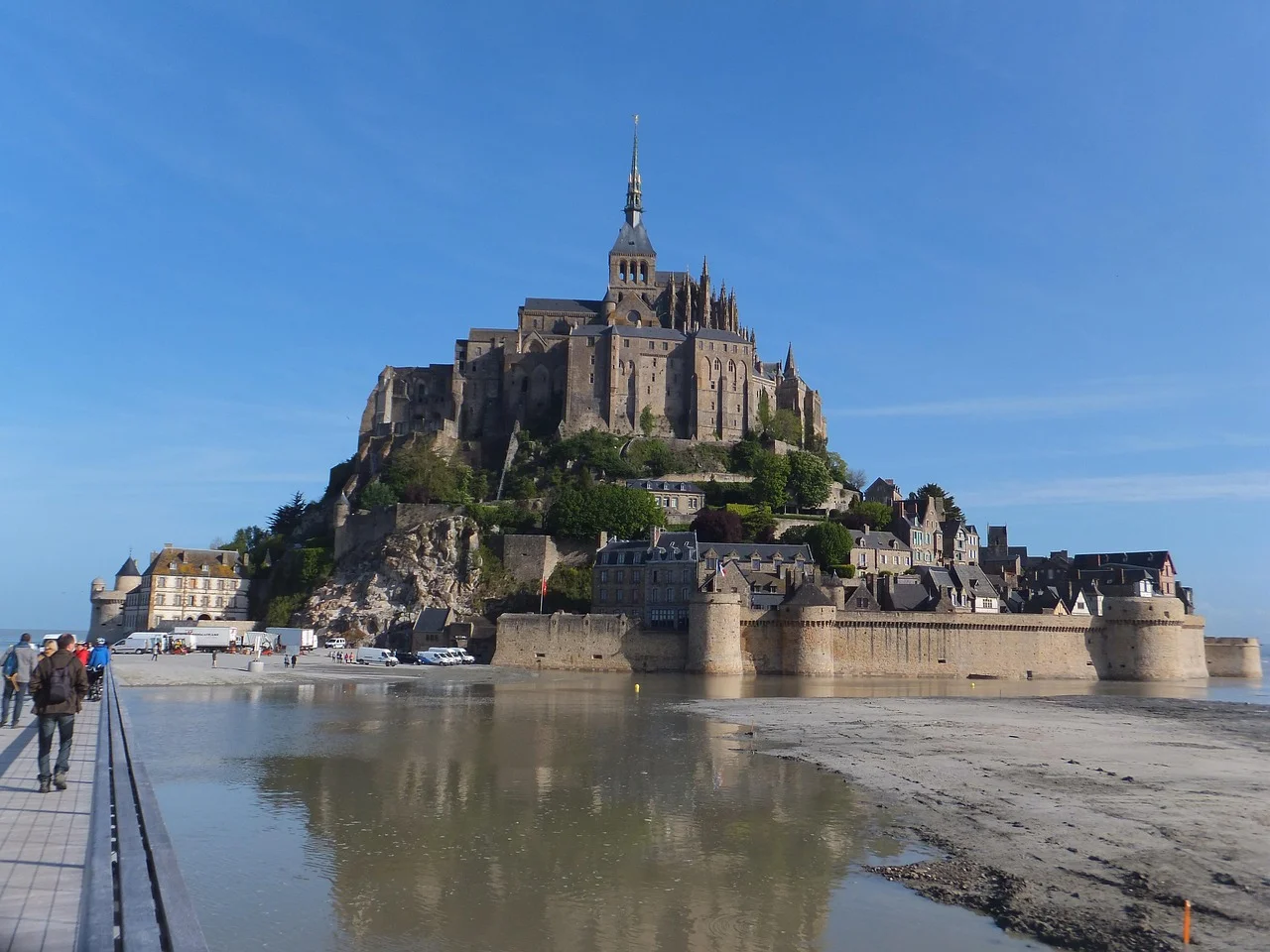
The tides are one of the great attractions of Mont-Saint-Michel, as some of the most spectacular tides in Europe occur in its bay. The official tourist office indicates that the schedules are based on SHOM predictions for Saint-Malo and recommends adding about 5 minutes for accuracy; moreover, only on a few days a year the high tide can temporarily block access across the esplanade, although the footbridge remains out of the water.
How to park near the Abbey of Mont-Saint-Michel: is there parking?
Yes, the Mont-Saint-Michel has parking lots for visitors, located about 2.7 kilometers from the mountain. They are payable and open 24 hours a day; from there you can reach the Abbey by free shuttle or on foot, a journey that usually takes about 45 minutes depending on the crowds. In high season, the tourist office recommends booking in advance.
Opening hours of the Abbey of Mont-Saint-Michel
The Abbey of Mont-Saint-Michel is generally open from 9:00 am to 7:00 pm from May 1 to August 31 and from 9:30 am to 6:00 pm from September 1 to April 30. Last entry is allowed 1 hour before closing, and the monument is closed on January 1, May 1 and December 25; in addition, there may be exceptional closures on specific dates, so check the official schedule before visiting.
1
The origin of Mont Saint-Michel Abbey
According to medieval tradition, the history of Mont Saint-Michel Abbey dates back to the year 708, when Bishop Aubert of Avranches ordered the construction of the first sanctuary dedicated to the archangel St. Michael on the then Mont-Tombe. This origin combines faith, legend and symbolic power: it was not just a matter of erecting a place of worship on an isolated rock in the middle of the bay, but of consecrating an enclave that soon began to attract pilgrims fascinated by its location and devotion to the archangel.
Centuries later, in 966, a community of Benedictine monks settled there at the request of Richard I of Normandy, and that initial sanctuary began to transform into a great abbey. From then on, Mont Saint-Michel became one of the great spiritual and intellectual centers of the Middle Ages, while its architecture grew spectacularly between the 11th and 16th centuries, adapting to the rock and the surrounding tidal landscape. Therefore, to speak of the origin of the abbey is also to speak of the birth of a unique place: half sanctuary, half fortress, half architectural prodigy.
2
The abbey: between faith and strength
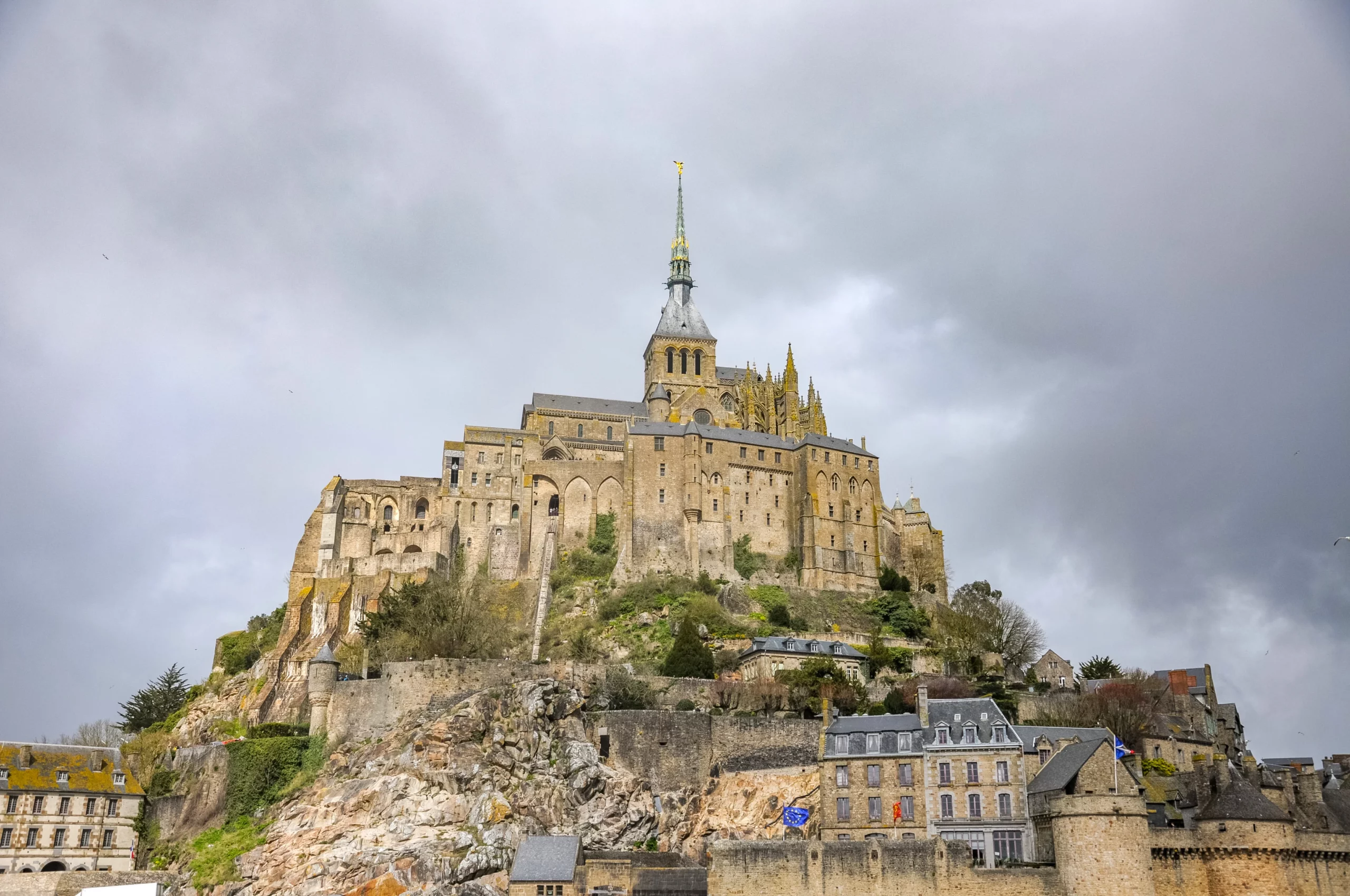
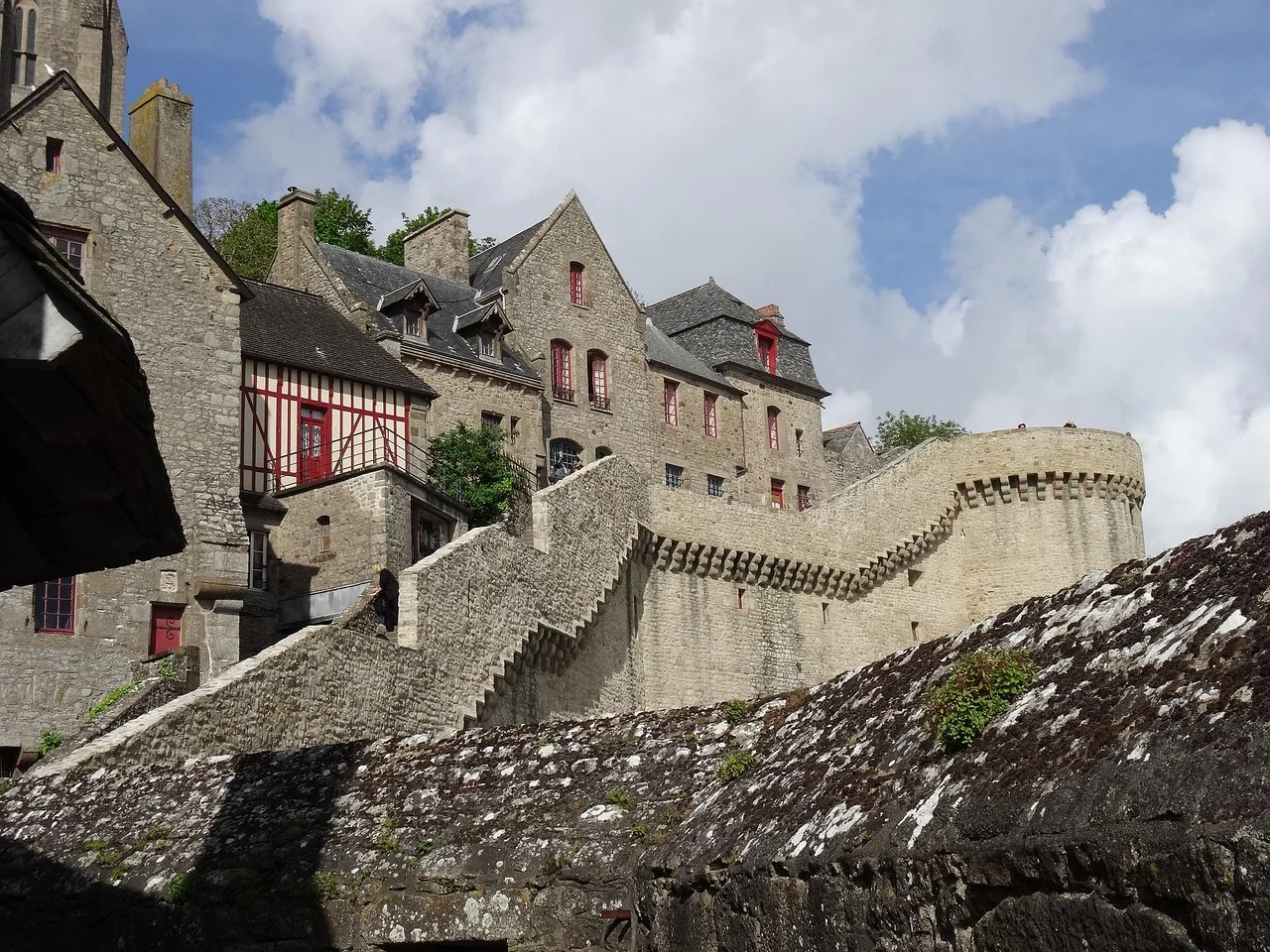
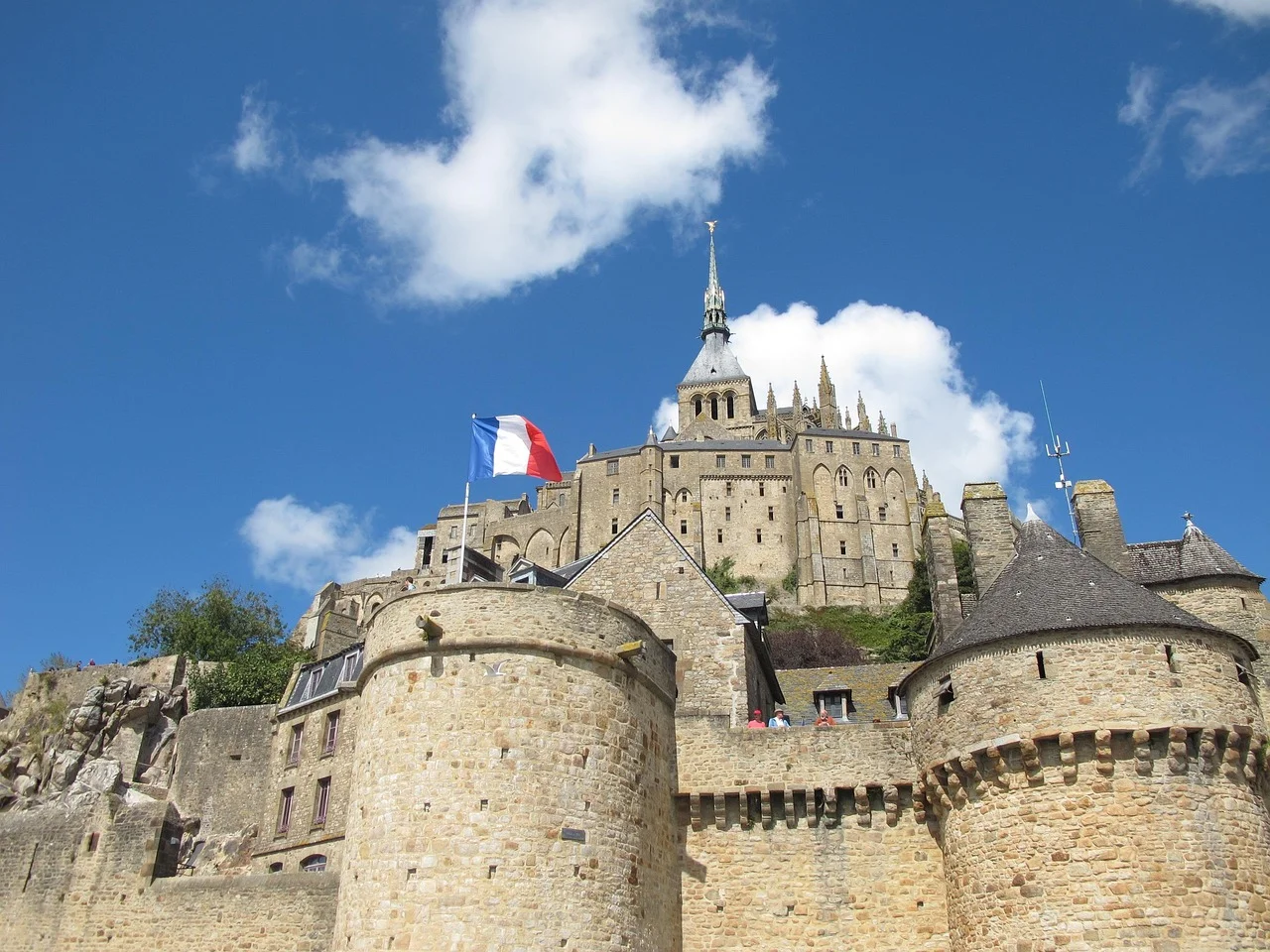
Over time, Mont Saint-Michel ceased to be only a pilgrimage destination and became aplace of enormous strategic value. Its isolated position, protected by the tides and difficult access, made it an easy-to-defend and highly symbolic enclave in times of conflict. This military dimension did not erase its religious character, but it did add a new layer to its identity.
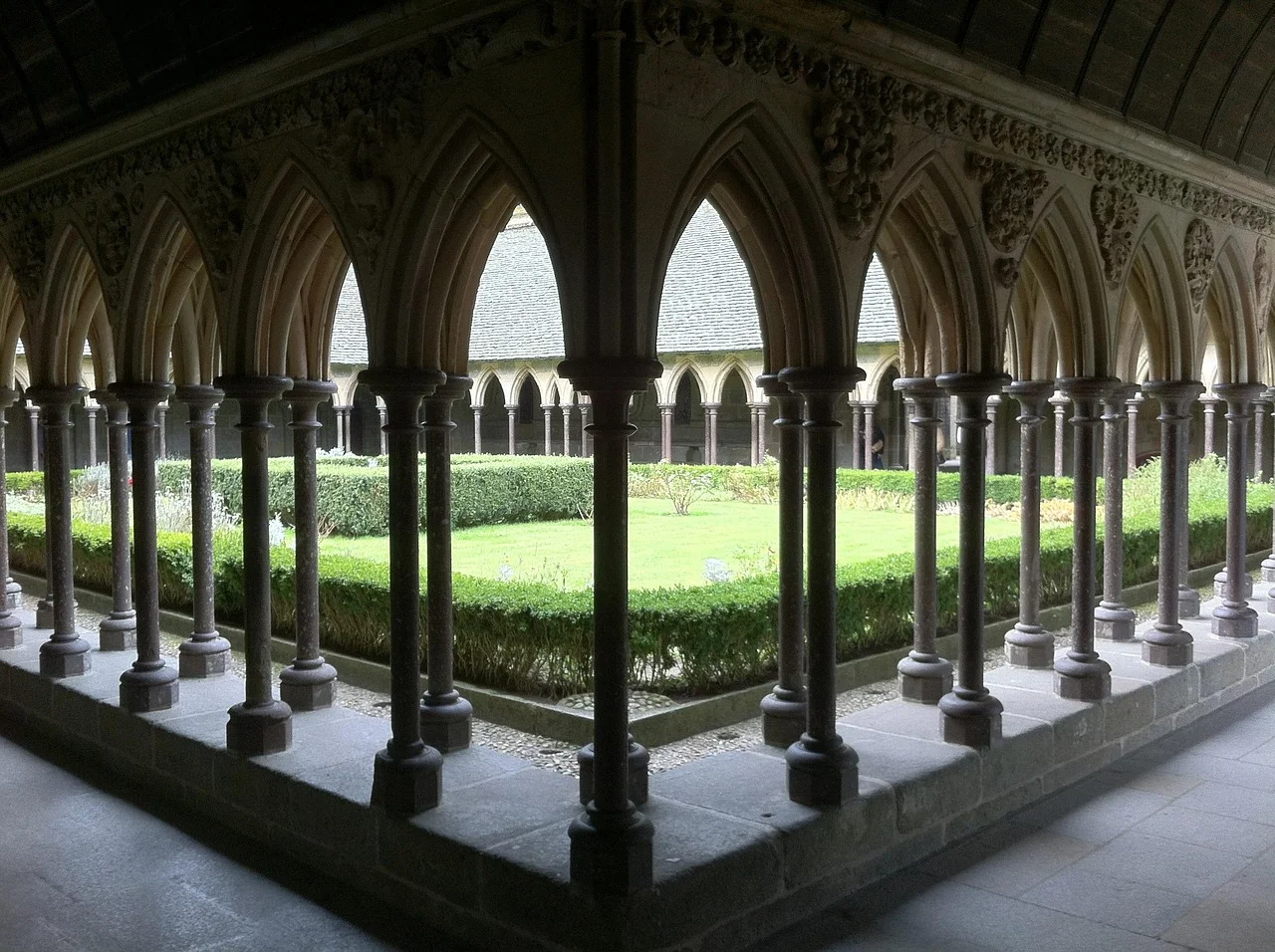
For this reason, the abbey conveys a very particular feeling: it does not only look like a monastery, nor only like a fortress. It is both at the same time. In its walls coexist the idea of spiritual refuge and resistance, as if prayer and defense had been part of the same story.
3
The abbey church
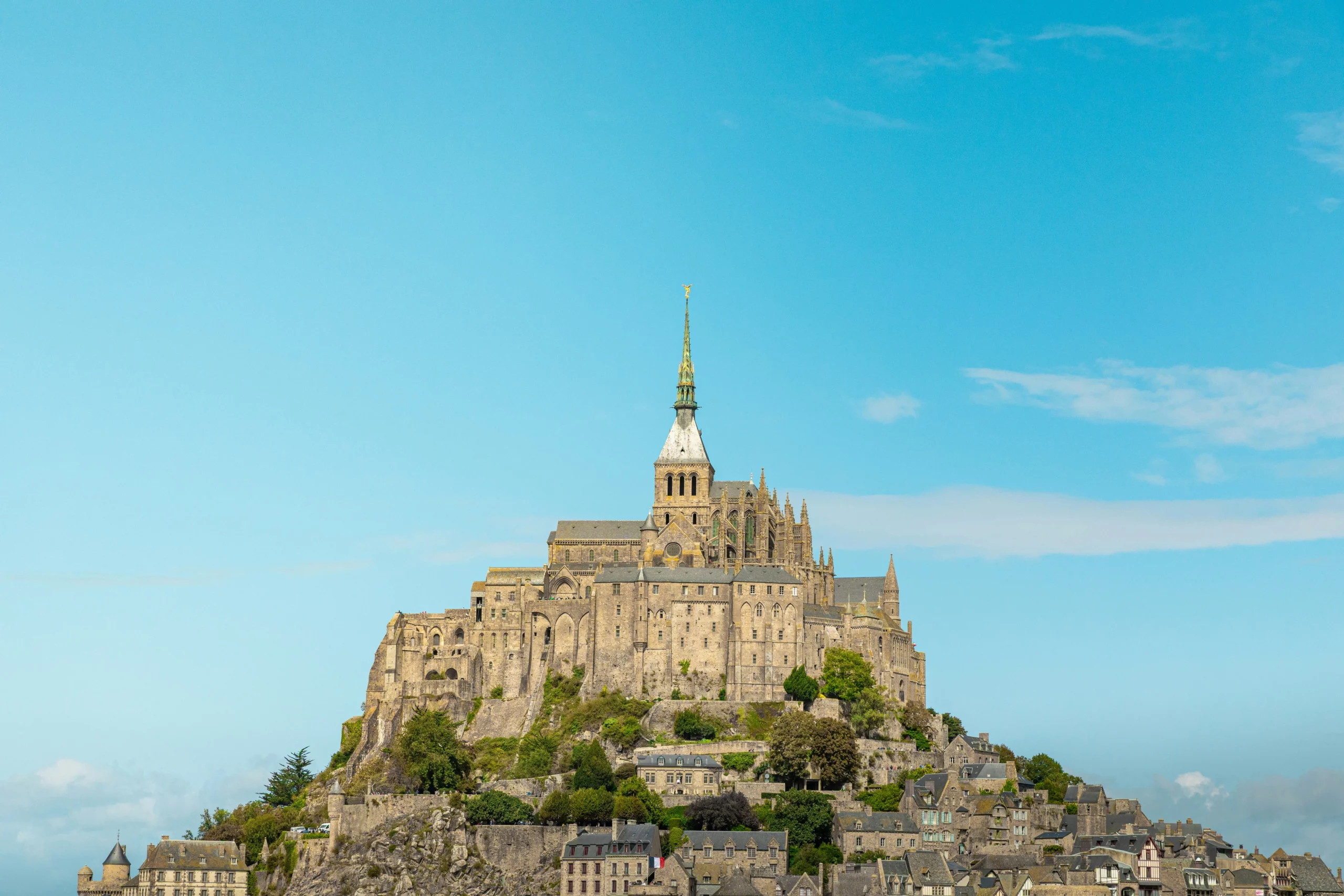
In the highest part of the complex stands the abbey church, the true spiritual and symbolic center of Mont Saint-Michel. Its location sums up very well the logic of the whole monument: from the rocky base to the top, the architecture seems to be organized as a continuous elevation culminating in the sacred space. It is not just an important building within the ensemble; it is the point towards which everything leads.
What is most impressive here is not only its religious or artistic value, but the sense of almost impossible balance it conveys. The church seems to emerge from the mountain itself, adapting itself to an extreme topography and resting on a complex structure that makes it possible. To contemplate it is to understand that the greatness of Mont Saint-Michel lies not only in its beauty, but also in the intelligence with which it was imagined and built.
4
The abbey turned into a prison
The history of Mont Saint-Michel was not always that of an exclusively religious place. There was a time when the abbey lost its monastic function and came to be used as a prison, and this change completely transformed the interpretation of the monument. Suddenly, spaces intended for prayer, study or community life became associated with enclosure, surveillance and a logic very different from the one that had given rise to them.
That stage adds a harsher and more complex historical layer. Far from simplifying the place’s past, it makes it deeper. Mont Saint-Michel is not only a beautiful image or a monumental postcard; it is also a building that underwent radical transformations and was reinterpreted according to the needs of each era. Thinking of the abbey as a prison forces us to look at it with more nuances and to understand that its memory is not unique, but plural.
5
Large tides and island feeling
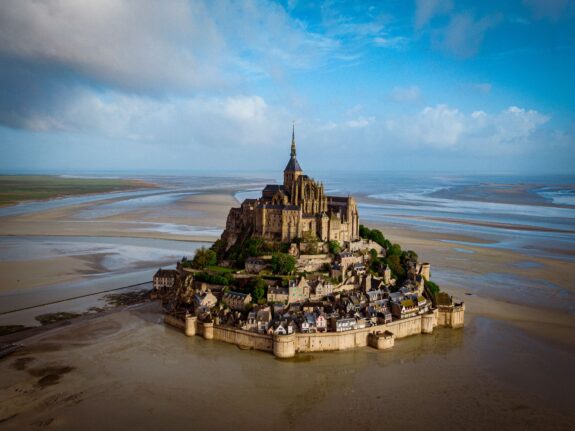
There is something that defines Mont Saint-Michel as much as its abbey, its ramparts or its profile silhouetted against the horizon: the movement of the bay. This place cannot be fully understood if it is seen as an immobile monument, because an essential part of its identity depends precisely on what changes. The tides continuously transform the landscape and make the environment never exactly the same. At times, the mountain seems almost attached to the land; at others, the water surrounds it and gives it back that powerful image of an isolated island, suspended between the sky and the sea.
This transformation is not just a natural detail, but a profound part of the experience of the place. Mont Saint-Michel was erected in a space where the border between land and water is never quite stable. That is why its silhouette is so fascinating: it rises not only on a rock, but on a living, changing landscape, where light, humidity, sand and the rhythm of the sea constantly modify the perception of the whole. The abbey does not dominate a fixed setting, but an environment in constant movement.
6
An abbey that is still alive
Although its silhouette seems to emerge directly from the Middle Ages, the Abbey of Mont Saint-Michel is not a monument locked in the past. Its history did not end when it left behind its great centuries of monastic splendor, nor when it went through stages of transformation, partial abandonment or restoration. On the contrary: one of the most fascinating things about this place is that it has continued to find new ways to remain present, to adapt to the passage of time and to preserve its meaning without becoming a mere historical decoration.
That is precisely what distinguishes it from other great monuments. Here one does not have the impression of being in front of an immobile ruin or a frozen space to be contemplated from the outside. The abbey continues to transmit life, not only through its material preservation, but also through the continuity of its spiritual, cultural and symbolic dimension. Even today it still has a very special capacity to bring together memory, beauty and experience, as if each era has left its mark without completely erasing the previous one.
6
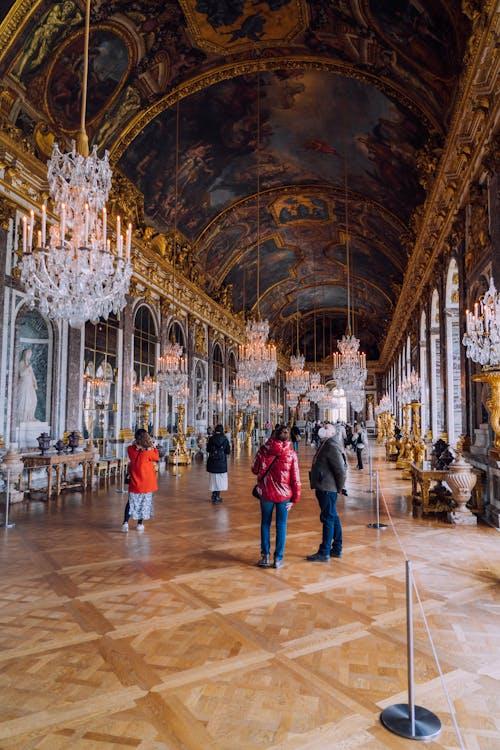
Gallery of Mirrors: the most iconic jewel of Versailles
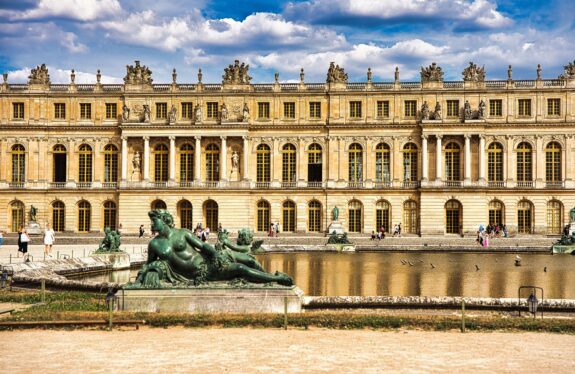
The Gardens of the Palace of Versailles are much more than a complement to the palace: they are an essential part of its history and its message of power. Designed in the 17th century by André Le Nôtrethe great landscape painter of Louis XIVwere conceived as a perfect setting where nature was “ordered” with the same discipline with which the king organized the court.
Endless avenues, geometric flowerbeds, monumental fountains and ponds reflect that unmistakable French style, designed to impress at every turn. Strolling through the gardens is like walking through a real open-air theater, created for parties, royal promenades and water and music shows that made Versailles the most admired place in Europe.
8
The King's Room: the ceremonial heart of Versailles
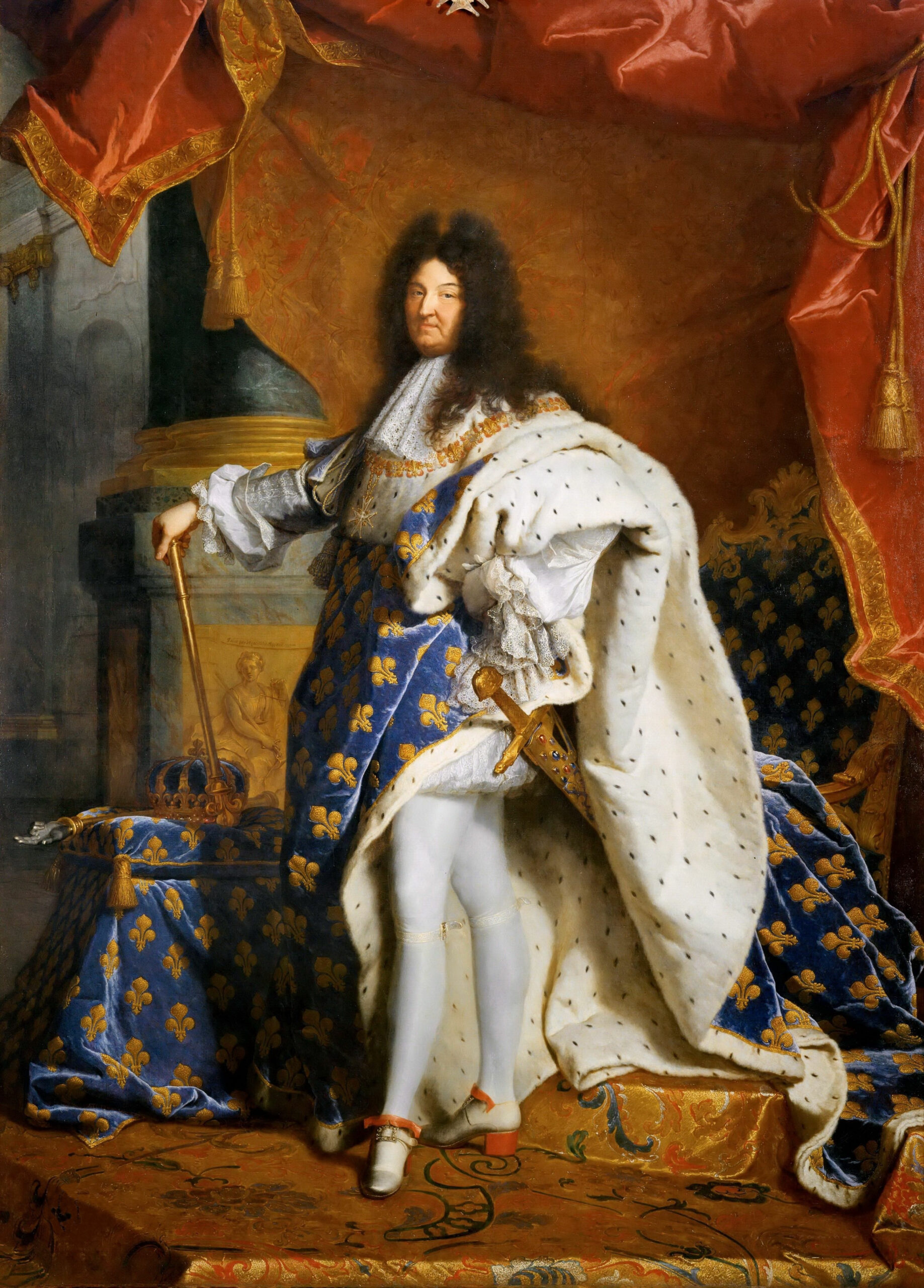
The King’s Room was much more than a bedroom: it was the symbolic center of the Palace of Versailles and the power of Louis XIV. Louis XIV. Located in a strategic place of the palace, this room became the scene of the most important rituals of the court, where every gesture reinforced the authority of the monarch.
Ceremonies such as the lever (the moment when the king “stood up”) and the coucher (when he retired to rest), authentic public events attended by selected nobles. At Versailles, even the king’s private life was transformed into a political spectacle. To enter this room is to understand how the palace turned everyday life into propaganda: everything revolved around the king, and the king was the center of France.
Customer Service
Customer service from Monday to Sunday from 8:30 am to 8:00 pm. We can assist you in both Spanish and English.
Contact us
We help you with whatever you need
Still need help?
Form Sent Successfully
Customer service from Monday to Sunday from 8:30 a.m. to 8:00 p.m. We can assist you in both Spanish and English.
If you have already sent your request for information through this or another channel, we will respond as soon as possible. To speed up the response, we ask that you do not submit additional requests through different channels, as this could cause delays in processing.
Trust and Transparency
Book with the peace of mind that comes from traveling with MY TOP TOUR
At My Top Tour we are a travel agency specialized in tickets and cultural experiences in some of the most visited destinations in Europe. We help you organize your visit to the Abbey of Mont Saint Michel in a simple, safe and accompanied way.
We are not the monument's official website. We operate as a travel agency, and our prices may include administrative fees, assistance, and additional services—all of which are clearly disclosed throughout the purchase process.